
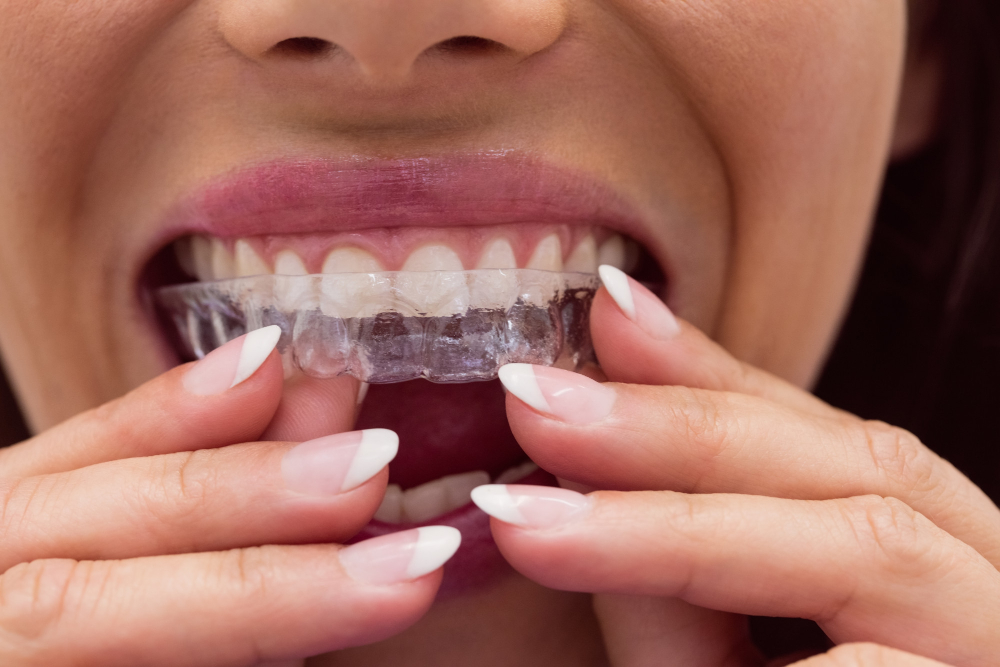
The decision between invisible dental aligners and traditional metal braces can be a daunting one. The desire for a confident smile often meets the challenge of comparing comfort, appearance, and effectiveness. Doctors at Comprehensive Dental Care can help you make informed decisions by providing clear guidance, answering your questions, and offering personalized recommendations, allowing you to choose the best treatment for your specific needs.
What Are Invisible Dental Aligners?
They are a type of orthodontic treatment. It involves the use of a set of specially designed, transparent trays made of thermoplastic polyurethane to straighten teeth. They have numerous benefits:
Virtually Invisible Appearance
Invisible dental aligners are clear, custom-made trays that straighten teeth discreetly and effectively. Their nearly invisible design makes them popular among adults and self-conscious teenagers who prefer a treatment option that doesn’t draw attention to themselves.
Effectiveness
Modern aligner technology can effectively treat mild to moderate tooth misalignments. The outcomes are comparable to those of the traditional braces used in many patients.
Oral Hygiene
Aligners are removable. So, brushing and flossing are easy to do. You can maintain your regular oral hygiene routine without getting brackets or wires in the way.
No Food Restrictions
The question that people posed most of the time is, Do you have to wear Invisalign 24 hours a day? Aligners have to put in 20-22 hours a day. You can also take them off when you eat. This means that there are no food restrictions and no discomfort on chewing.
Comfortable to Wear
Aligners are made of smooth, medical-grade plastic, which solves the problems of cuts on the cheeks and gum irritation. They may still experience some discomfort during tooth shifting, but the pain is generally milder than with traditional braces.
Aesthetic Appeal
Appearance is one of the most significant advantages. There is no brace adjustment phase, no comments about new ones, no hesitation in taking photographs, and only the gradual improvement of your smile.
How Do Metal Braces Work?
It is a fixed orthodontic system, which aligns the teeth using brackets, wires, and constant, continuous pressure.
Detailed Examination
Your dentist begins with a comprehensive examination of your teeth, utilizing X-rays, photographs, and diagnostic measurements to assess your oral health. Based on the results, a treatment plan is designed to address the alignment, bite issues, and overall facial balance.
Bracket and Archwire Placement
Once the plan is approved, brackets will be bonded to each tooth using dental-grade cement. A metal archwire, which can be of stainless steel, nickel-titanium, or beta-titanium, is threaded through the brackets and fastened by using elastics or ligature wires.
Strength for Complex Movement
Braces provide consistent pressure. They help correct crowding, spacing, and severe bite problems, as well as complex tooth movements. They can move teeth in any direction, giving them an advantage over aligners in complex cases.
Advanced Options
Patients can choose ceramic braces that match the color of their teeth or lingual braces, such as Incognito TM, which can be placed behind the teeth. These solutions provide good performance with reduced visibility.
Regular Adjustments
You have to do follow-up visits. This will enable the orthodontist to tighten the wires, adjust elastics, or change archwires as needed. These changes slowly set teeth into their perfect positions.
Durability
Braces offer long-term reliability, as they are made of strong materials, including stainless steel brackets and titanium wires. They often cost less than aligners and can achieve faster results in closing gaps and complex alignment needs.
How Can Comprehensive Dental Care Help You Choose the Right Orthodontic Option?
The dentists at Comprehensive Dental Care will help you choose the option that best fits your teeth, lifestyle, and goals, whether it’s invisible aligners or metal braces.
Complete Evaluation
Comprehensive Dental Care will conduct a comprehensive evaluation, including X-rays, bite assessments, and 3D analysis, to determine whether invisible dental aligners or metal braces are the best solution for your specific dental issues. Multi-step rotations, extreme crowding, and bite discrepancies are more effectively treated with braces, whereas moderate misalignment is best treated with aligners.
Comparison of How Each Treatment Works
You receive a clear explanation: Invisible aligners use removable trays to gently shift teeth, whereas braces use brackets, archwires, and elastics to move teeth more firmly and precisely.
Treatment Simulation
Digital modeling will show how your teeth will move with aligners or braces. It will also be an approximate duration of treatment. This visual comparison helps you to choose between these two options easily and confidently.
Monitoring Progress
Aligners require periodic check-ins, while braces need monthly adjustments. We will help you determine the method that is more reliable in terms of long-term stability, depending on your bite issues.
Cost and Complexity
Our team will explain how the cost changes depending on the severity of the case, treatment duration, and any additional fees. You can compare the financial aspects of aligners vs. braces before making a decision.
Conclusion
Several factors should be considered when deciding between invisible dental aligners and traditional braces. Determine which pros and cons matter most to you, ask questions, and gather all the necessary information. Comprehensive Dental Care ensures clarity, guidance, and confidence as you make the best orthodontic decision.